California warehouses are holding the most valuable inventory of the year right now — and the newest numbers say thieves know it. Verisk CargoNet counted 547 cargo thefts across the United States and Canada in the third quarter of 2026. That is fewer incidents than a year earlier, but estimated losses still rose 12%, to $230.1 million, and the average value of a stolen load jumped roughly 72%. California reported 182 of those incidents — about a third of the national total — with Los Angeles, San Bernardino, and Riverside counties named as the areas of highest concentration. Holiday warehouse security is the difference between a facility that survives the Q4 surge and one that becomes the next case file.
Why the Holidays Are the Riskiest Weeks for Warehouses
The fourth quarter changes the risk profile of every distribution facility in California. More trucks, more product, more temporary staff, and longer nights create new exposure points — and criminals plan around them.
Peak inventory value. Electronics, apparel, toys, and seasonal goods stack up for weeks before Black Friday and Christmas. A single trailer can be worth more in November than at any other time of year.
Holiday closures and thin staffing. CargoNet’s own advisory warns that extended closures, reduced staffing, and freight sitting longer than usual over the holidays create openings for thieves. A yard full of loaded trailers and an empty guard post is exactly the combination organized crews look for.
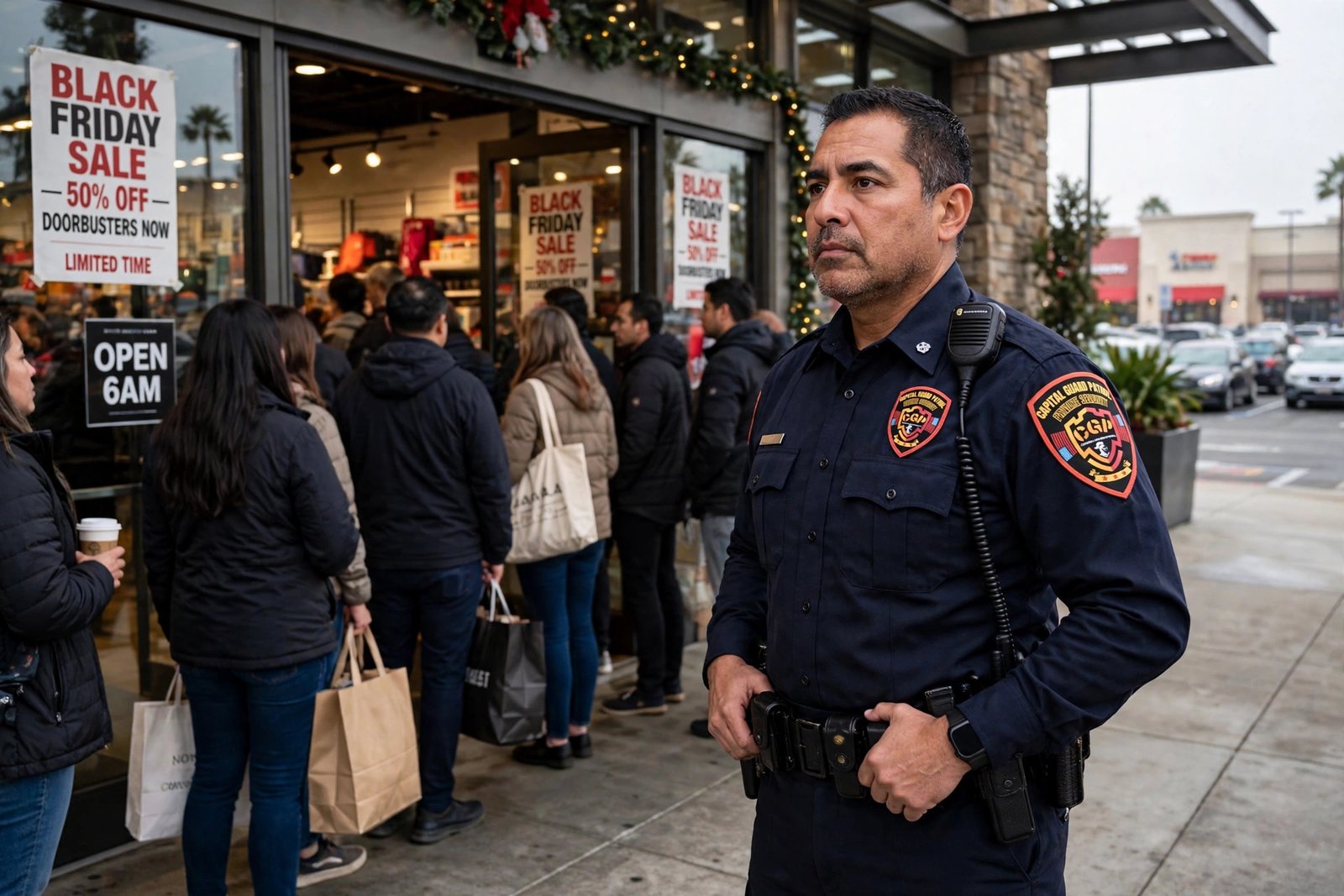
Seasonal hires and open doors. Temporary workers mean more badge access, less vetting time, and more people moving through docks and yards who do not know the site — or who were never supposed to be there.
Early darkness. By late November, Southern California loses daylight before 5 PM. After-hours theft happens in the dark, and unpatrolled yards, drop lots, and dock doors are where it starts.
CargoNet notes that cargo theft has historically risen in the fourth quarter and into the new year. The weeks between Thanksgiving and January are not a slowdown for freight crime — they are the peak season.
This Week in Southern California: The Threat Is Not Theoretical
On November 19, 2026, federal prosecutors unsealed charges against 14 people accused of stealing more than $22.5 million in cargo — mostly Nike sneakers and Milwaukee power tools — from at least three dozen freight trains across Southern California. The crew allegedly cut brake lines to stop trains at planned locations, cut into more than 70 containers, and resold the goods through a Los Angeles sneaker and streetwear business. The alleged scheme ran from February 2024 through November 2026, moving freight that entered the United States through the Ports of Los Angeles and Long Beach.
The bust is a win for law enforcement. It is also a warning: the crews targeting California freight are organized, patient, and well-funded, and they work the same corridors — ports, rail lines, warehouses, and distribution centers — where holiday inventory is sitting right now.
The Fictitious Pickup Problem Is Getting Worse
Not every holiday theft involves a break-in. About one in four cargo theft incidents reported in the third quarter of 2026 — 138 cases — was a fictitious pickup, up from 18% a year earlier. A thief poses as a legitimate carrier, shows up with convincing paperwork, and drives off with a full load. No forced entry, no alarms, no broken glass.
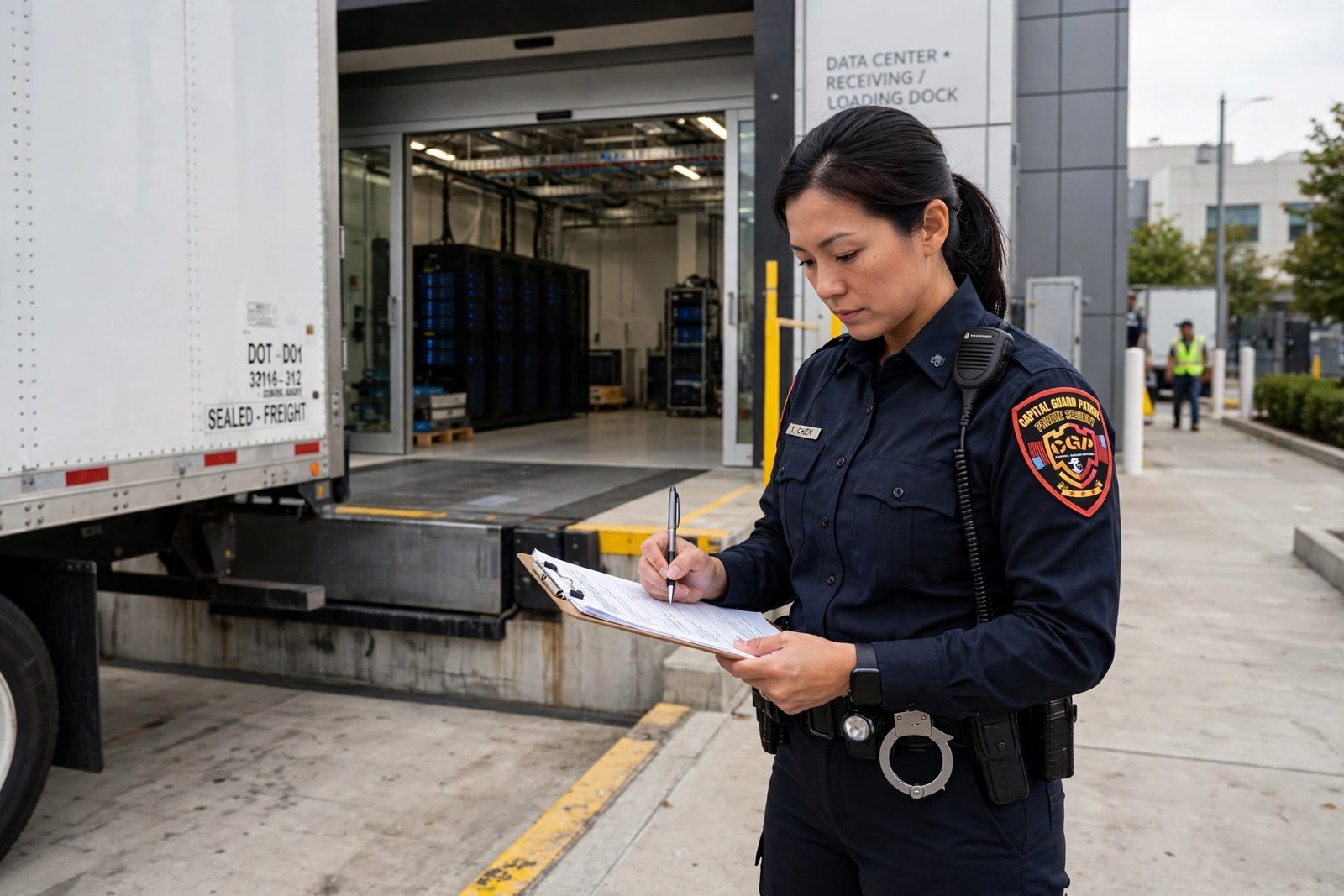
A camera records a fictitious pickup after the fact. A trained guard at the gate can stop it in the moment by matching the driver, the carrier, and the load against the facility’s own records — and holding any pickup that does not match, no matter how polite or well-documented it looks. That verification step is the single most effective defense against the fastest-growing form of cargo theft, and it only works when a person is standing at the gate who knows what to check.
What Holiday Warehouse Security Actually Covers
Professional holiday warehouse security is layered, because the holiday threat is layered. A serious program covers:
- Staffed gate and yard access control — Every tractor and trailer entering or leaving gets verified against the load schedule. Fake paperwork dies at a staffed gate, and every visitor and driver gets logged.
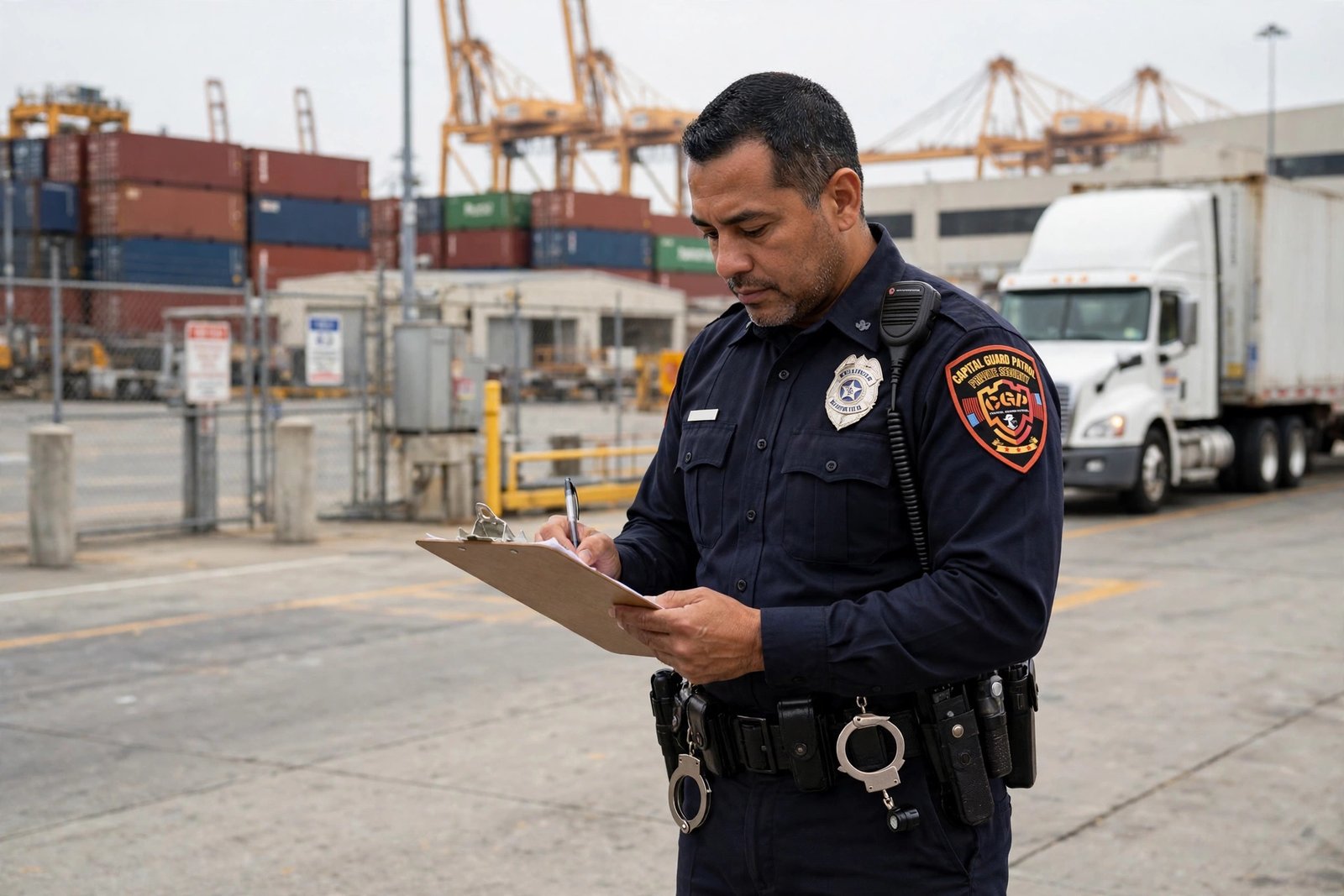
- Yard patrols and trailer checks — Guards walk the yard on randomized rounds, checking seals, kingpin locks, and reefer units — and noting which trailers have been sitting too long or were moved without authorization.
- Dock door supervision — Loading and unloading get supervised so product does not walk out the back door during a busy holiday shift, when dock doors are open for hours and temporary staff are everywhere.
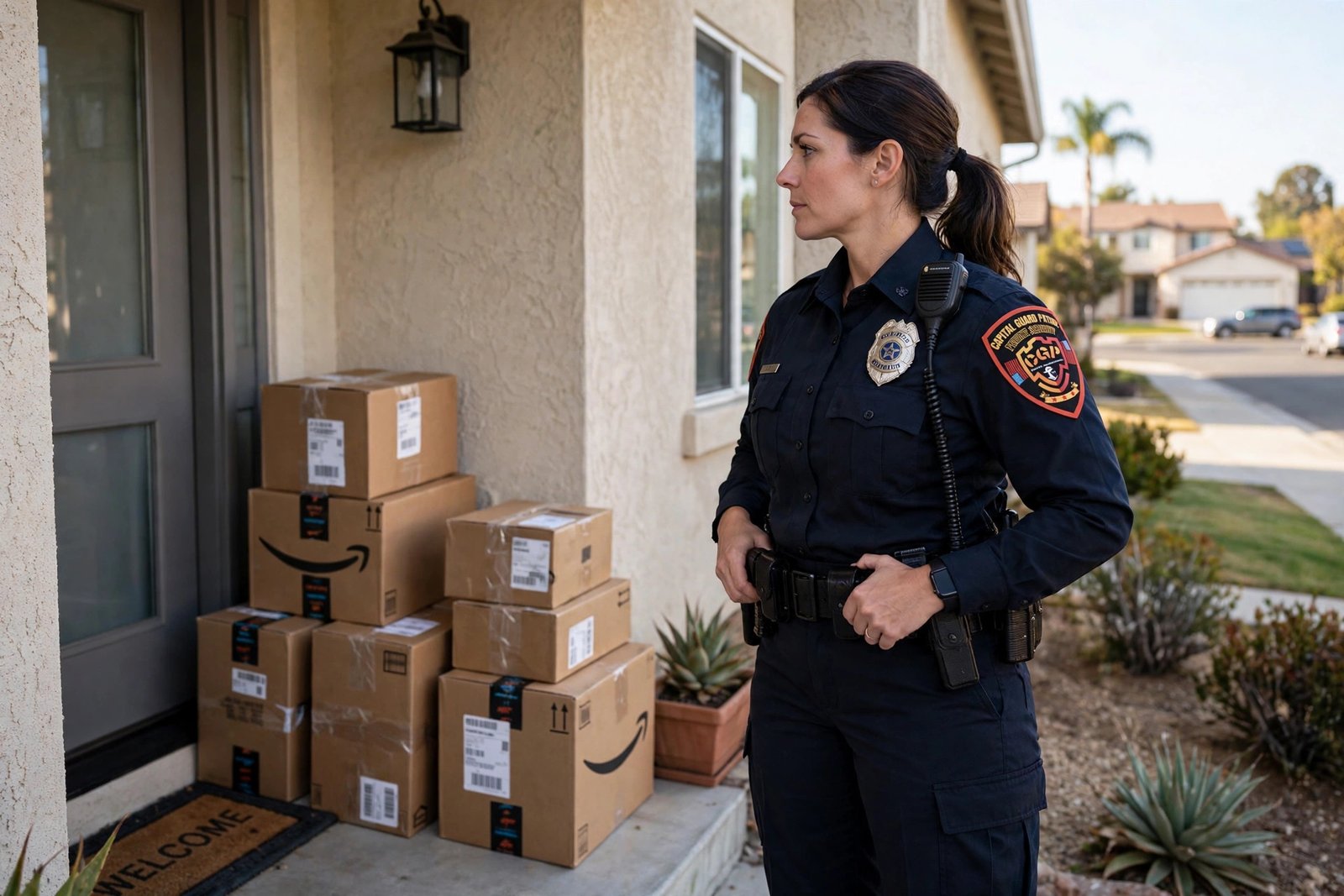
- After-hours and holiday-closure coverage — Most trailer theft happens when the facility is dark. A marked patrol vehicle in the yard and a guard on rounds through Thanksgiving weekend and the Christmas–New Year closure is the cheapest deterrent available.
- Incident reports that hold up — Photos, timestamps, seal numbers, and driver details logged every shift — the kind of evidence law enforcement and insurers actually need when a load goes missing.
The Window to Staff Up Is Now
Thanksgiving is this week, and Black Friday lands November 27. Warehouses that wait until a trailer disappears are already behind — the CargoNet numbers show the average stolen load is worth far more than it was a year ago, and the $1 million-plus thefts nearly doubled in the third quarter alone, from 9 to 19.
If your facility is holding holiday inventory in Los Angeles, the Inland Empire, Orange County, or San Diego, the question is not whether the risk is real — the numbers settled that. The question is whether anyone is standing at your gate, walking your yard, and checking your pickups while your regular staff is home for the holidays.
Protect your inventory before the holiday rush peaks. Capital Guard Patrol Inc. provides holiday warehouse security, cargo theft prevention, and warehouse and logistics security across California, including Los Angeles, the Inland Empire, Orange County, and San Diego. Call (800) 640-1235 for a free holiday warehouse security assessment.