The crackdown is real. This week Los Angeles County District Attorney Nathan Hochman announced that his office has filed more than 1,000 Proposition 36 felony theft charges against repeat offenders — part of an aggressive new enforcement push that includes joint operations with the LAPD, the Sheriff’s Department, and the California Highway Patrol, plus thousands of bright yellow warning decals going up in storefronts across the county. For California retailers, organized retail crime prevention has suddenly moved from the loss-prevention budget line to the front page.
What Proposition 36 Changed for Retail Crime
California voters approved Proposition 36 in November 2024 (the “Homelessness, Drug Addiction, and Theft Reduction Act”), and it took effect December 18, 2024. Before it, petty thefts under $950 were misdemeanors no matter how many times the offender struck — a cycle of cite-and-release that let serial shoplifters steal with near-impunity. Prop 36 changed the math:
- Repeat theft is now a felony. Individuals with two or more prior theft convictions can face felony charges even for sub-$950 thefts — up to three years in jail or prison.
- Theft values can be aggregated. A string of smaller thefts by the same person can be combined to cross the $950 felony threshold.
- Organized retail theft gets real teeth. Crews that once treated misdemeanors as a business expense now face felony prosecution.
The DA’s office says those arrested under Prop 36 so far are responsible for the theft of more than $1 million in merchandise. Statewide, the CHP’s Organized Retail Crime Task Force reports over 3,700 investigations, 4,300 arrests, and the recovery of 1.3 million items valued at over $53 million.
Why Enforcement Alone Won’t Save Your Store
Tougher laws are a deterrent, but deterrence happens before the thief walks in — and prosecution happens after the merchandise is already gone. The cases the DA highlighted make the point: one defendant allegedly hit the same West Los Angeles 7-Eleven 12 times between January and March; a three-person crew allegedly stole nearly $42,000 in circuit breakers from Home Depot and Lowe’s stores across the county. These weren’t one-off shoplifters. They were organized, repeat operations — the kind that scout locations, test response times, and come back until someone stops them.
“Our goal is not to fill our prisons with these thieves,” Hochman said. “If anything, that will be the failure of our efforts. Our goal is to deter these criminals from committing these crimes in the first place.” That is exactly where on-the-ground organized retail crime prevention comes in: visible security makes your location the one the crew skips.
What Organized Retail Crime Prevention Looks Like in 2026
Organized retail crime (ORC) crews — booster teams, smash-and-grab groups, and fencing operations that move stolen goods through online marketplaces — pick targets the way predators pick prey: the easiest, least-observed location wins. A real prevention program layers physical presence over your highest-risk moments:
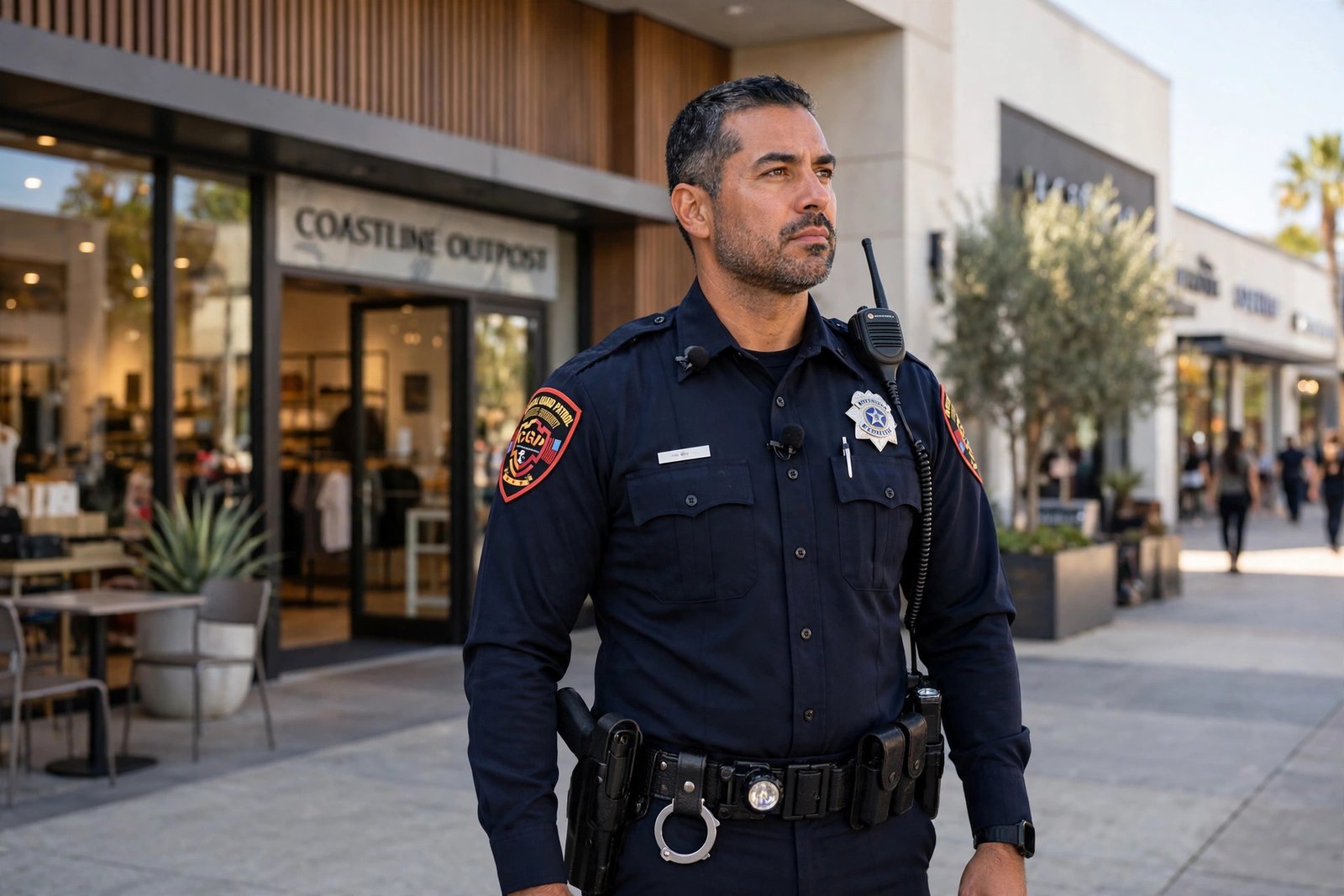
Uniformed guards at the entrance — A professional, uniformed guard at the door is the single most effective visible deterrent against both booster crews and opportunistic shoplifters. Crews casing a location move on to unguarded stores.
Parking lot and perimeter patrols — A significant share of ORC activity happens around the property: staging cars, fencing merchandise, and smash-and-grab staging in the lot. Marked patrol presence closes that window.
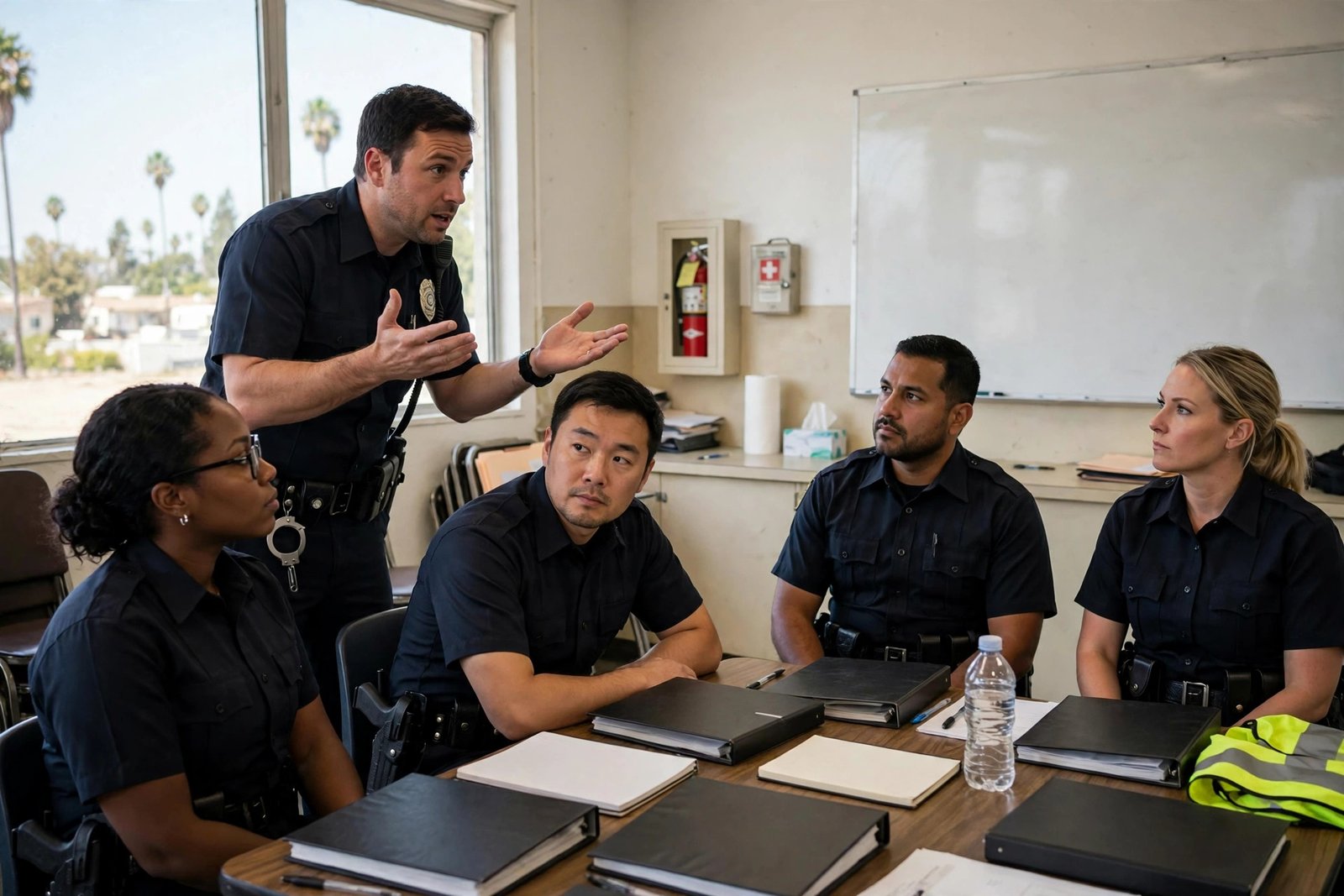
Trained observation and documentation — Guards trained in behavioral indicators log suspicious activity with photos and timestamps. That documentation becomes evidence — exactly what prosecutors need to build the felony cases Prop 36 enables, and what your insurance carrier wants after an incident.
Coordination with law enforcement — When incidents happen, guards who know how to preserve a scene, write clean reports, and interface with responding officers turn a loss into a prosecutable case instead of an unsolved one.
After-hours coverage — Break-ins and burglary crews operate when stores are dark. Overnight guards and mobile patrol checks protect inventory when your staff isn’t there.
The Math for California Retailers
The national data underscores the urgency: 79% of loss-prevention and organized retail crime leaders say they are more concerned about cargo and retail crime than ever before, and 40% of retailers report annual cargo theft losses of at least $1 million. In California — where organized theft rings concentrate around major logistics and retail corridors — the question is no longer whether to invest in prevention, but how much inaction costs. With Prop 36, every prevented incident also keeps your store out of the incident reports, the insurance claims, and the headlines that follow smash-and-grabs.
Don’t wait for a smash-and-grab to make your store the example. Capital Guard Patrol Inc. provides organized retail crime prevention, uniformed retail security guards, and parking lot patrol services across California, including Los Angeles, Orange County, the Inland Empire, and San Diego. Call (800) 640-1235 for a free retail security assessment.
Related reading: Cargo Theft Prevention and California Security Guard Training Requirements (SB 1203).