
The numbers from the second quarter of 2026 should stop every California shipper in their tracks. Reported cargo theft incidents actually fell 26% year over year — yet losses more than doubled, to $304.6 million, with an average loss of about $564,000 per theft. Fewer thefts, far bigger hauls. That is the signature of strategic cargo theft prevention’s new enemy: organized rings that pick loads by value, not by opportunity.
Capital Guard Patrol Inc. has watched this shift up close at California warehouses and distribution yards. The old threat was a bolt cutter at midnight. The new threat is a phone call.
How Strategic Cargo Theft Works in 2026
Strategic cargo theft means the load is stolen through deception, not force. According to CargoNet’s Q2 2026 data, business email compromise and shipment misdirection remain a primary way in, and fictitious pickups — where criminals pose as a legitimate carrier to collect a load — held nearly steady through the quarter. The American Trucking Associations made cargo theft a headline topic at its October 20 management conference, noting the crime now costs trucking $18 million every day.
October alone shows how fast the playbook is spreading:
The fake broker call (New Jersey, October 3) — A driver hauling a $273,000 load of frozen seafood received a call and texts from someone claiming to represent the legitimate freight broker. He was told to divert part of the load to a transfer point. Police arrived to find suspects moving pallets of shrimp, salmon, and branzino from the reefer into a box truck.
The vanished almonds (Kerman, California, September 29) — A $400,000 almond shipment disappeared before investigators traced it to San Joaquin County and made four arrests.
The trading cards (Southern California, October 13) — Two pallets of graded sports and Pokémon cards vanished from a FedEx truck. Police put the initial value at $963,000, with no arrests announced.
The pattern is the same in every case: thieves who learn what a load is worth, where it is going, and who is hauling it can intercept it without ever touching a lock. A September 2026 survey of loss-prevention leaders found 79% are more concerned about cargo theft than ever before, and 81% say it has become more organized.
Why California Yards Are Prime Targets
California moves an outsized share of the nation’s high-value freight, and the Inland Empire holds one of the densest warehouse concentrations in the country. High-value, small-footprint goods — electronics, pharmaceuticals, copper, collectibles — pack enormous dollar value into a single trailer. When one two-pallet load can carry a six-figure value, the economics of targeting it change completely.
The weak points are almost always physical: a drop lot with no gate staff, a warehouse where anyone in a hi-vis vest blends in, a dock door nobody is watching during a busy shift change. Fraud gets the load moving; a missing human at the gate lets it leave.
What Strategic Cargo Theft Prevention Actually Looks Like
Technology helps — real-time location visibility and anomaly detection top what loss-prevention leaders say works. But no software stops a driver with convincing paperwork. Strategic cargo theft prevention layers trained people on top of the tech:
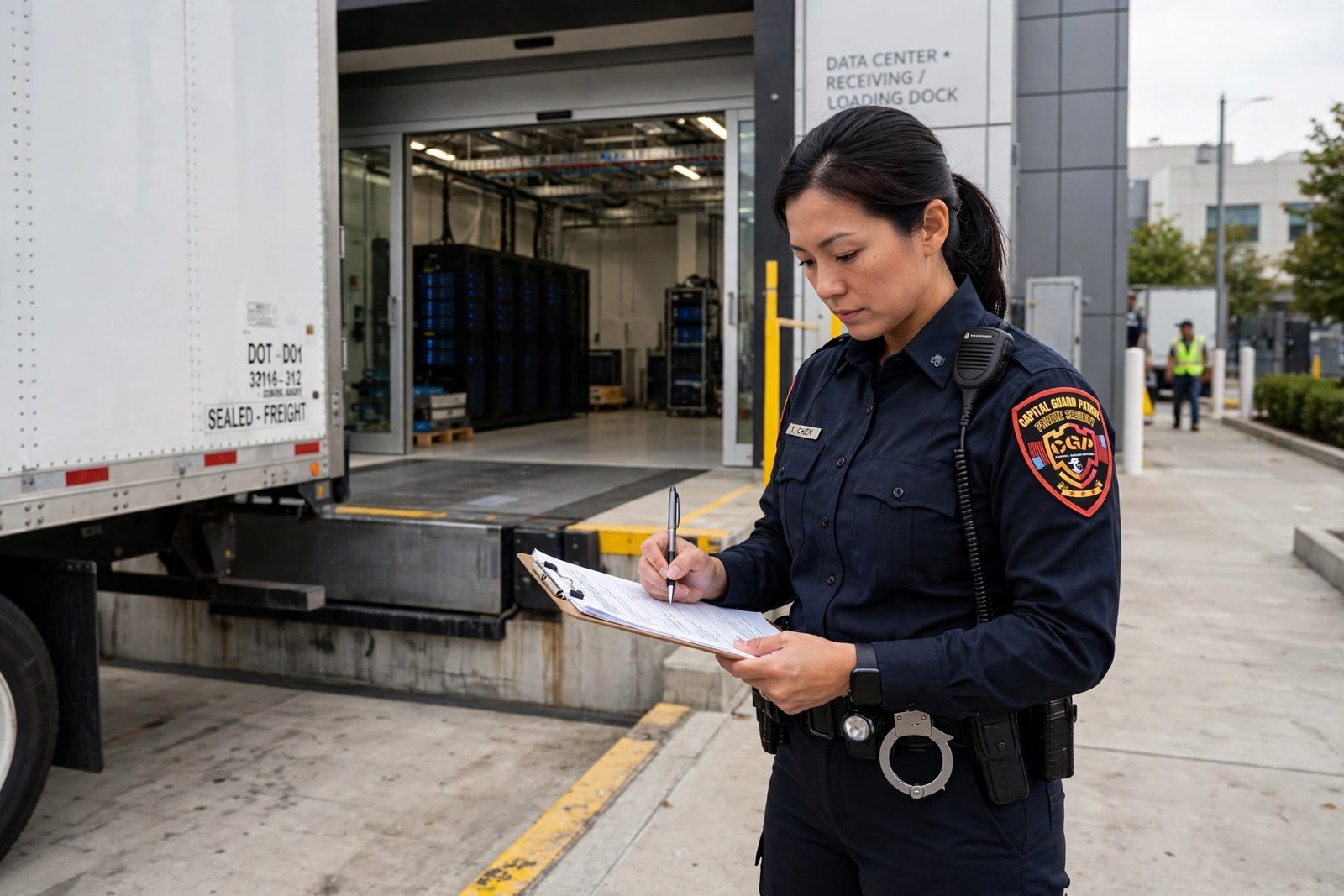
Staffed gate verification — Every tractor and trailer entering or leaving is checked against the load schedule, and every carrier’s identity is confirmed before a load is released. A fictitious pickup dies at a staffed gate.
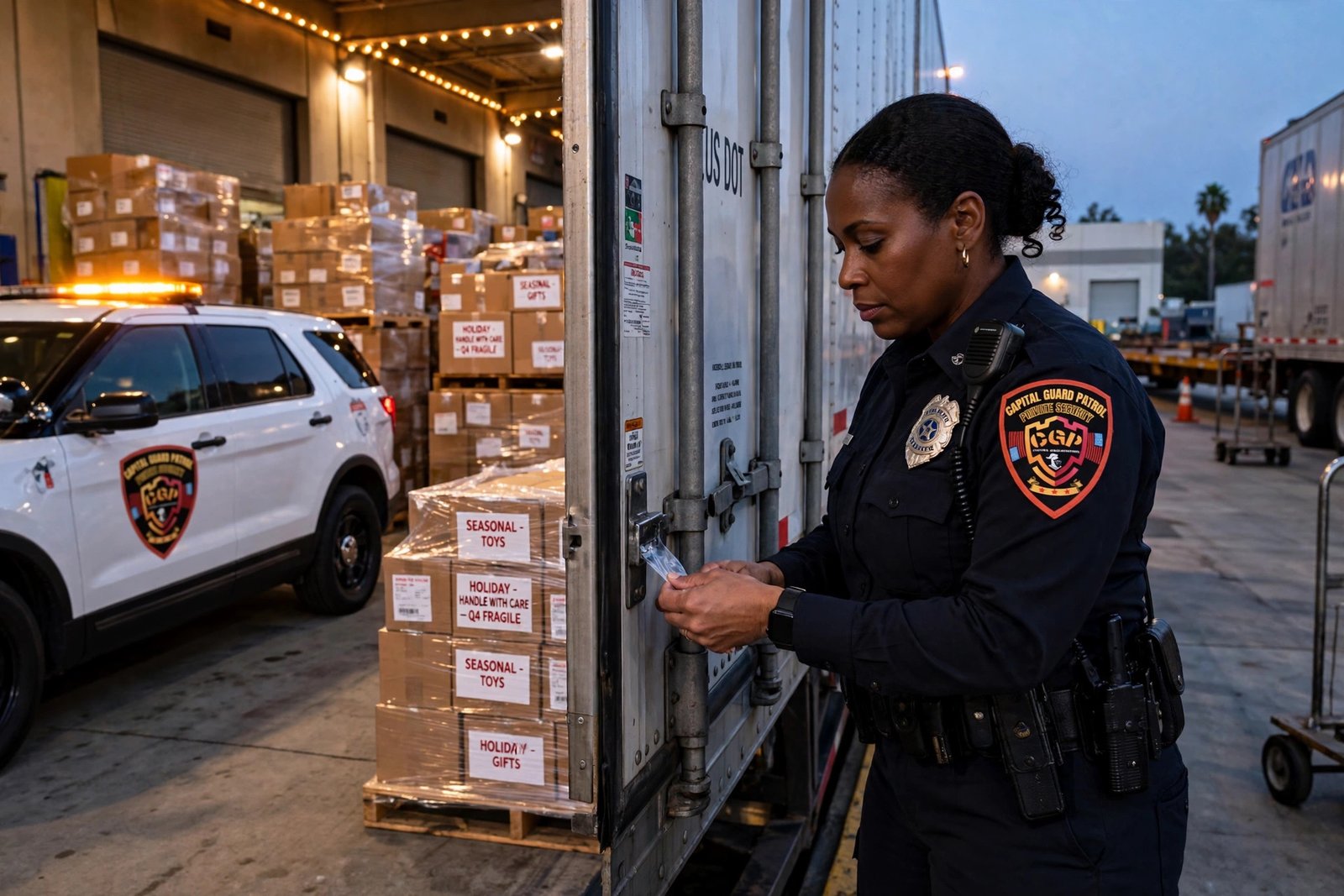
Seal and trailer checks on randomized rounds — Guards walk the yard checking seals, kingpin locks, and reefer units, and flag trailers that have been sitting too long.
Dock door supervision — Loading and unloading get watched so product does not walk out the back door during a busy shift.
After-hours yard presence — A marked patrol vehicle in the yard is the cheapest deterrent available, and it is exactly what an unstaffed lot lacks at 2 a.m.
Documentation that holds up — Photos, timestamps, seal numbers, and carrier details logged every shift — the evidence law enforcement and insurers need when a load goes missing. Most cargo theft still goes unreported; the companies that document recover more.
This builds directly on the fundamentals in our earlier cargo theft prevention guide: the difference in 2026 is that the gate check matters as much as the fence.
The Cost of Doing Nothing
Cargo theft now costs trucking up to $6.6 billion a year. The ATA is pushing for the Combating Organized Retail Crime Act to strengthen enforcement across state lines — but legislation moves slowly, and your next load ships Monday. Against six- and seven-figure losses, a staffed gate and overnight yard patrol is one of the highest-ROI line items in a logistics budget.
Stop freight fraud at the gate, before it rolls. Capital Guard Patrol Inc. provides strategic cargo theft prevention, yard security, and warehouse guard services across California, including Los Angeles, the Inland Empire, Orange County, and San Diego. Call (800) 640-1235 for a free supply chain security assessment.
Related reading: cargo theft prevention and our security guard services.
One Response