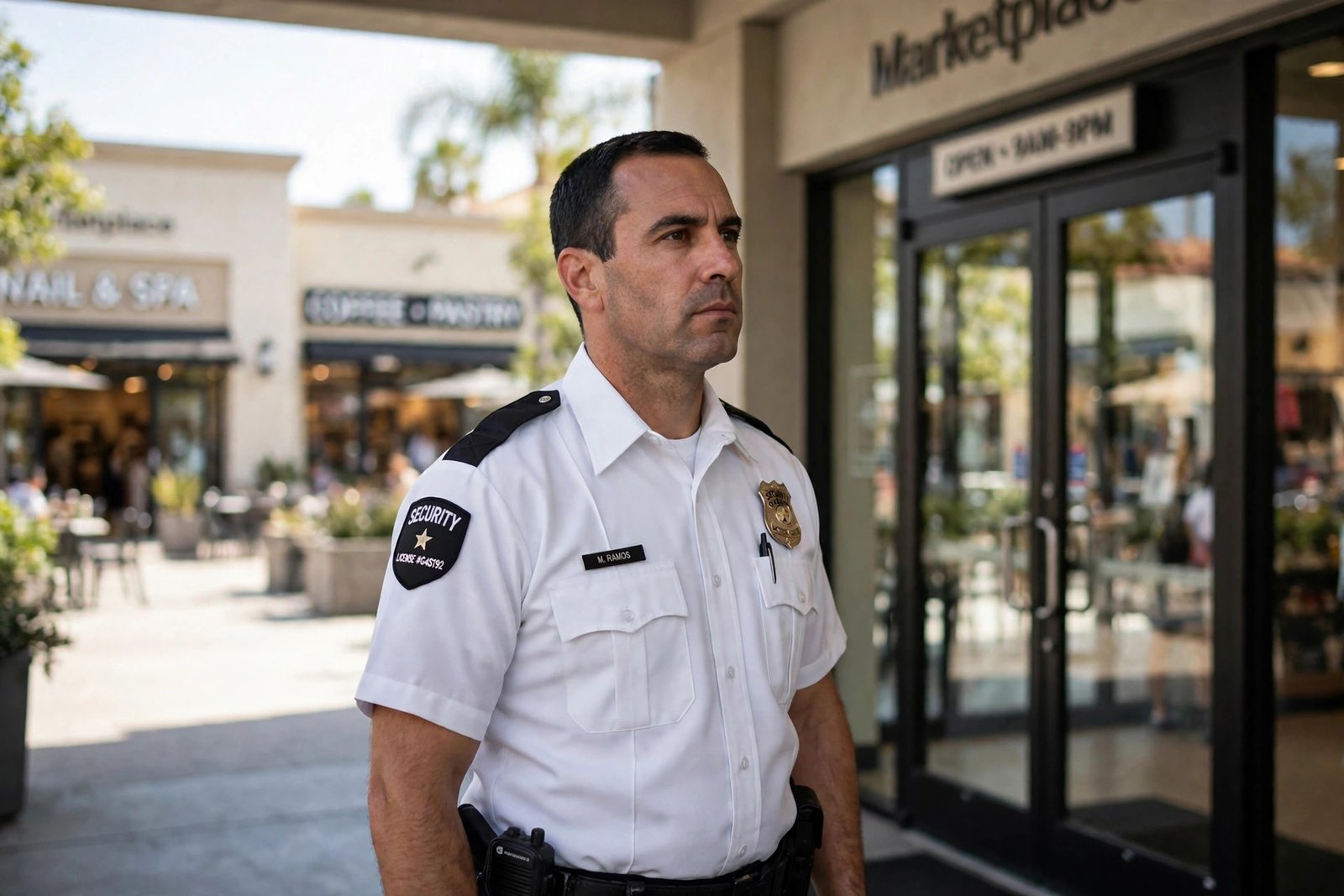
It took one weekend in October to change the conversation. When an armed robbery in West Hollywood left a well-known actor bloodied and rattled a whole neighborhood, and the LA County Sheriff’s Department answered by increasing patrols across the city, California business owners started asking a question they had been avoiding: do we need armed security guards? For high-risk locations — dispensaries, jewelry stores, late-night retail, warehouses holding valuable product — the answer is increasingly yes.
The October Robbery Wave: Why California Is on Edge
The headlines came fast this month. On October 8, an armed robbery in West Hollywood prompted the LA County Sheriff’s Department to increase patrols in the Rainbow District and across the city. Days later, television actor Keegan Allen was robbed at gunpoint and knifepoint on a West Hollywood sidewalk — complying with the attackers and still taking a pistol to the head, leaving him with a concussion and a public warning that “West Hollywood was no longer safe.” As of this weekend, the search for the suspects remains active.
And it is not just street crime. An October 9 arrest in San Mateo closed out a robbery and shooting that targeted a man driving home from his job at an Oakland cannabis dispensary — two suspects, a broken car window, two shots fired. Dispensaries have always been targets: California cannabis businesses hold cash and high-value product, and organized crews know it. In the Bay Area, an SF dispensary was previously hit by a group that overwhelmed its armed guard and took his firearm.
The pattern is consistent: unarmed presence is not stopping determined, armed crews.
Armed vs. Unarmed: How to Decide
Not every business needs armed security guards. A corporate lobby or HOA gate does fine with a professional unarmed officer. But armed protection pays for itself in specific situations:
Cash and high-value product on site — Dispensaries, jewelry and watch dealers, check-cashing services, and warehouses storing electronics or luxury goods are robbery magnets. Armed guards remove the “soft target” label.
Late-night or isolated hours — Businesses operating after dark, in industrial areas or quiet retail corridors, face slower police response. An armed guard closes that gap.
History of incidents — If your location or block has seen robberies, break-ins, or armed threats, a repeat visit is a matter of when. Insurers and landlords notice the pattern too.
Public-facing controversy — Protests, labor disputes, or viral attention can turn a storefront into a flashpoint overnight. Armed guards trained in de-escalation hold the line without escalating it.
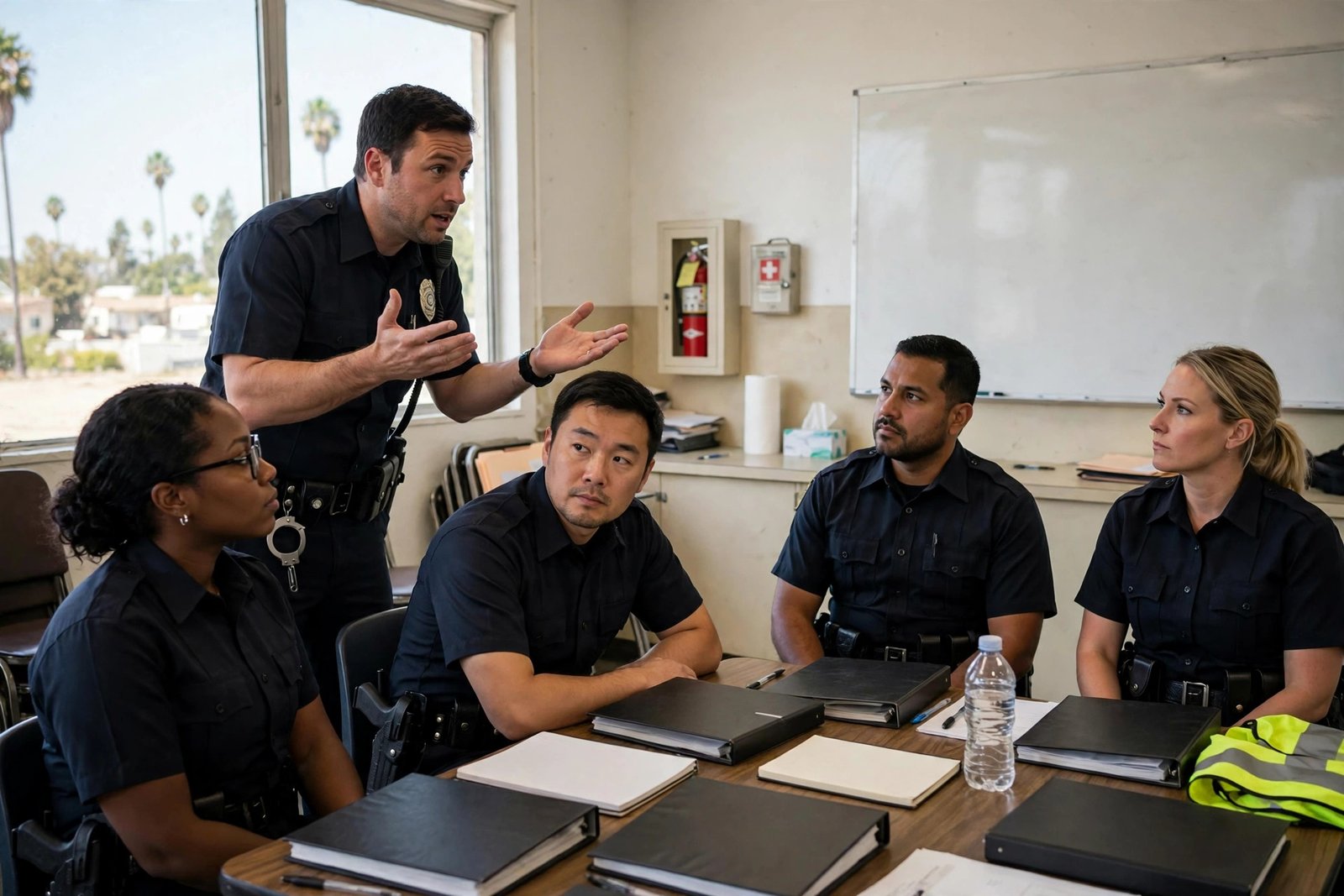
The key difference is not just the firearm — it is the training. In California, armed guards carry an exposed firearm permit on top of their guard card, with range qualification, use-of-force instruction, and background screening. (Note: SB 1203, signed September 30, 2026, will further tighten California guard training requirements in the coming years — another reason to hire a company that already trains above the minimum.) An armed officer is not a gun with legs; the best ones are deterrents first, de-escalators second, and marksmen last.
What Armed Security Guards Actually Do on a California Site
A professional armed posting is structured, not improvised:
Visible deterrence — A uniformed, armed officer at the door changes the risk math for any crew casing the location. Most deterrence happens before anything starts.
Access control — ID checks, visitor logs, and bag checks at entrances, with the authority to turn away armed or threatening individuals.
Cash-handling escort — Securing deposits, cash deliveries, and product transfers between the register, safe, and bank or armored pickup.
Surveillance and documentation — Monitoring cameras, logging incidents with timestamps and photos, and preserving evidence that holds up for police reports and insurance claims.
Incident response — When something does happen, an armed guard buys time: containing the scene, protecting people, and coordinating with arriving law enforcement.
One guard is not a guarantee against a coordinated crew — even armed posts can be overwhelmed, as the SF dispensary case shows. But layered security — armed officers plus cameras, lighting, access control, and patrols — is what moves your business off a crew’s target list.
What to Ask Before You Hire
Are your armed guards BSIS-licensed with current firearm permits? Ask for permit numbers and verify them. A company that hesitates is telling you something.
How much de-escalation training do they get? The firearm is the last resort. You want guards trained to talk situations down first.
Can you scale coverage? Holiday season, a viral moment, or a threat spike may call for two officers instead of one, or overnight coverage you did not have before. Your provider should flex with you.
What does incident reporting look like? Daily activity reports with photos, timestamps, and incident details — the kind of documentation insurers and police actually use.
Protect your business before the next headline. Capital Guard Patrol Inc. provides armed security guards, unarmed officers, and patrol services across California, including Los Angeles, West Hollywood, Orange County, San Diego, and the Inland Empire. Call (800) 640-1235 for a free security assessment.
Related reading: security guard training requirements under California’s new law, and our security guard services.