
Los Angeles police recovered about $1 million in stolen rail cargo twice in October 2026 — and rail cargo theft prevention is suddenly back at the top of every shipper’s worry list. On October 21, LAPD’s Cargo Theft Task Force, working with BNSF and Union Pacific railroad police, the Port Police, and Homeland Security Investigations, served a search warrant after a controlled purchase of stolen shoes being sold on eBay. The search recovered 35 pallets of BNSF train property — Brooks, Hoka, New Balance, Adidas, On, Salomon shoes, and JanSport backpacks — and a business owner was arrested on suspicion of receiving stolen property.
It was the second $1 million rail recovery in Los Angeles this month. Weeks earlier, a September 30 search in Whittier recovered 59 pallets of merchandise police say was stolen from BNSF and Union Pacific trains: Yeti drinkware, name-brand shoes, JanSport backpacks, and Shark vacuums. And in Colton, police recovered 350 boxes of Hot Wheels, worth about $54,000, after a tip about an active freight-train burglary. Rail cargo theft is not a distant problem. It is happening along the tracks and in the yards of Southern California right now.
Why Southern California Is the “Red Zone” for Rail Cargo Theft
Risk platform Overhaul has dubbed the Los Angeles metro area the “Southern California Red Zone”: the region accounted for 37% of all cargo thefts in the United States between July 2025 and June 2026 — nearly as much as Texas, Illinois, and Florida combined. Warehouse thefts made up 55% of incidents in the region, point-of-origin thefts 18%, and rail thefts 17%.
That geography is no accident. The ports of Los Angeles and Long Beach, the Alameda Corridor, and the Inland Empire’s dense warehouse belt mean freight sits, transfers, and waits in Southern California more than anywhere else in the country. Every transfer point — rail yard, intermodal facility, drop lot, warehouse dock — is a place where a load can be watched, followed, or cut open. Trains that slow or stop in urban corridors are especially exposed: crews have learned exactly where a train pauses long enough to work a container.
How Rail Cargo Thieves Operate
Today’s rail thieves are organized and patient:
Train burglaries on the move and at rest — Crews target containers on slow-moving or stopped trains, cutting seals and offloading boxes in minutes, then disappearing into nearby streets before a patrol arrives.
Yard and intermodal theft — Containers and trailers sitting in yards, drop lots, and intermodal facilities are stolen whole or pilfered, often at night when no one is watching the gate.
The resale pipeline — Stolen goods do not sit in a warehouse. They move fast through illegitimate distributors, discount storefronts, and online marketplaces — which is exactly how the October 21 LAPD case started, with a controlled purchase on eBay. Both arrested business owners in the October cases told police they bought inventory from brokers or middlemen who were not legitimate distributors.
Cargo theft’s long tail — Even when police recover goods, shippers face claims, delays, and lost sales. The October recoveries are the exception: most stolen freight is never found.
What Rail Cargo Theft Prevention Actually Looks Like
Cameras record a theft. Rail cargo theft prevention stops one — and it starts with people on the ground:
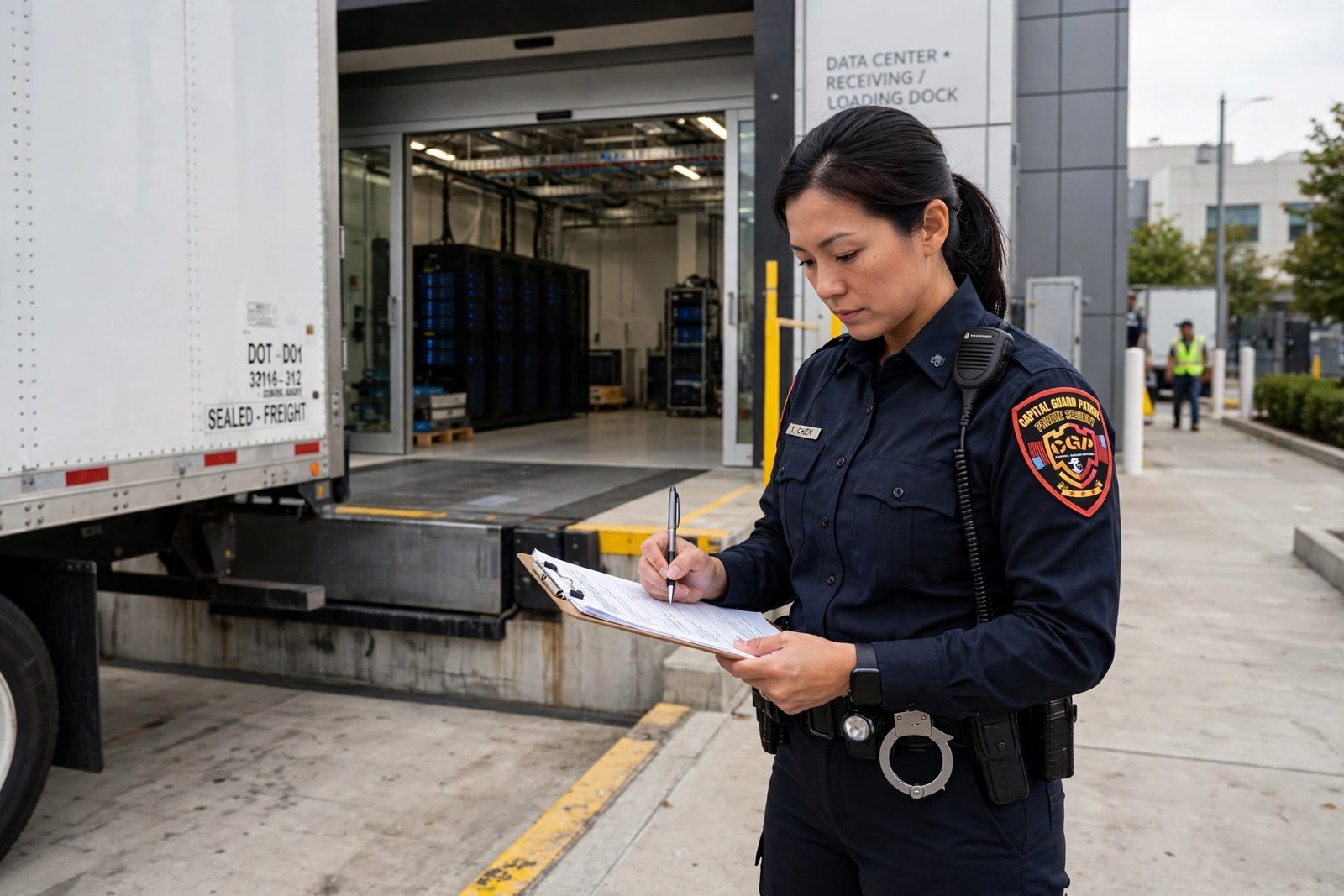
Staffed yard and gate access control — Every truck, trailer, and visitor entering or leaving a rail-adjacent yard is verified against the schedule. Unauthorized pickups die at a staffed gate, not at a loading dock.
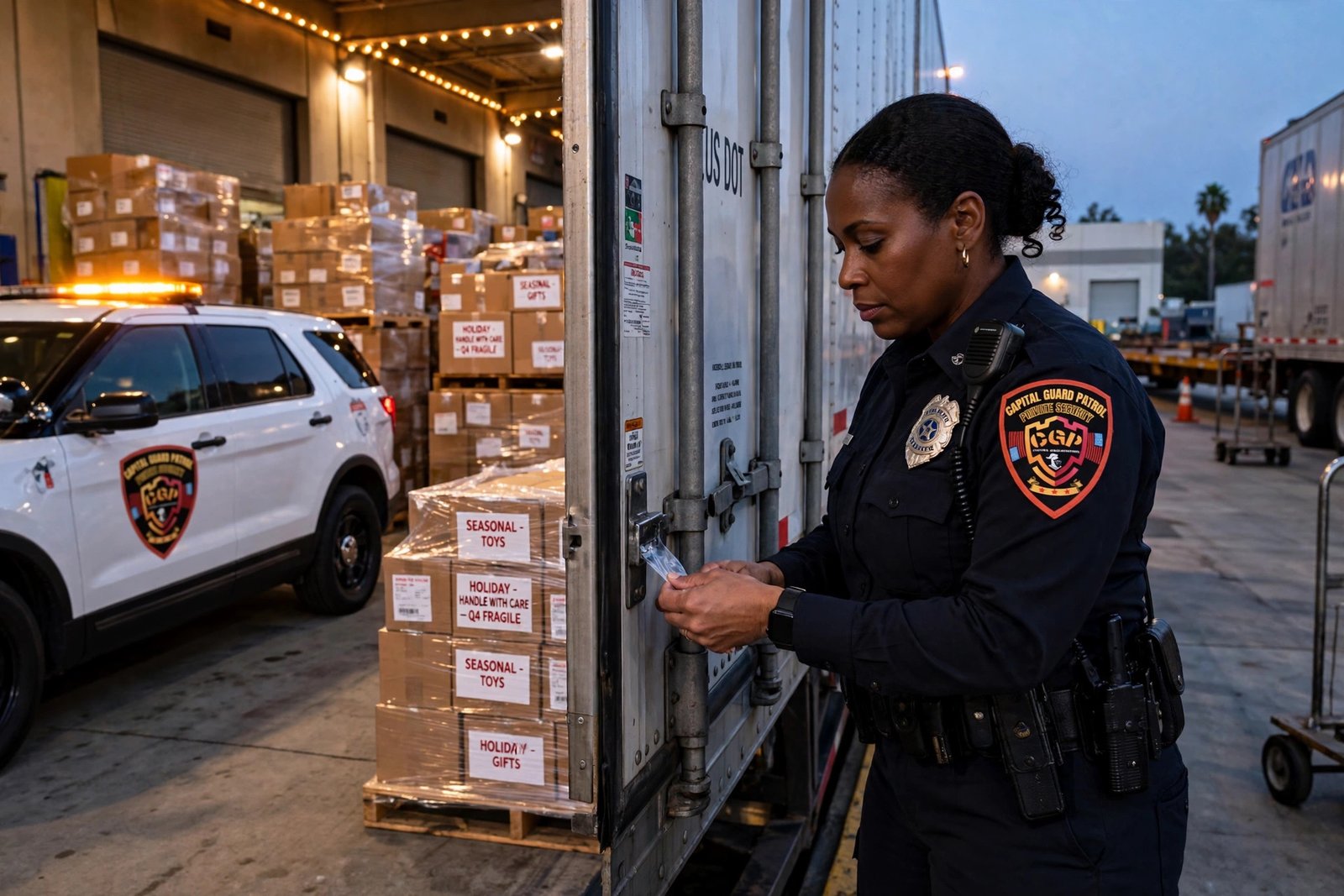
Rail yard and perimeter patrols — Guards walk the yard on randomized rounds, checking container seals, trailer locks, and fencing — and noticing what does not belong before it becomes a loss.
Intermodal and dock monitoring — Transfers between rail, truck, and warehouse are supervised so product does not walk out during a busy shift change.
After-hours presence — Most yard and rail theft happens when the facility is dark. A marked patrol vehicle in the yard is the cheapest deterrent available, and a guard on site is the fastest response when a seal is cut.
Incident documentation that holds up — Photos, timestamps, seal numbers, and license plates logged every shift — the evidence law enforcement and insurers need, and the record that turns a recovery into a prosecution.
The Cost of Doing Nothing
Q2 2026 cargo theft losses across the United States and Canada reached $304.6 million, more than double the $135.7 million a year earlier, according to Verisk CargoNet — driven by a smaller number of much larger thefts. Against those numbers, a staffed gate and overnight yard patrol is not an expense. It is one of the highest-ROI line items in a logistics budget.
Protect your freight before it becomes a statistic. Capital Guard Patrol Inc. provides rail cargo theft prevention, yard security, and warehouse guard services across California, including Los Angeles, the Inland Empire, Orange County, and San Diego. Call (800) 640-1235 for a free freight security assessment.
Related reading: cargo theft prevention (https://capitalguardpatrol.com/cargo-theft-prevention/) and strategic cargo theft prevention (https://capitalguardpatrol.com/strategic-cargo-theft-prevention/).
One Response