The busiest container port complex in the United States just bought itself two more weeks — and the clock is now ticking toward November 20. On November 7, the Pacific Maritime Association and ILWU Local 26 agreed to extend contract talks covering roughly 250 security watchmen at the ports of Los Angeles and Long Beach, postponing a strike that had been authorized and repeatedly deferred. For terminal operators, shippers, and anyone moving freight through Southern California, the message is clear: port security guards are a small workforce with an outsized role in keeping cargo moving, and the next two weeks are the time to plan — not to wait.
What Happened at the Ports of Los Angeles and Long Beach
The watchmen’s labor contract expired in July 2025. Since then, the two sides have negotiated under a series of short-term extensions, with federal mediators from the Federal Mediation and Conciliation Service assisting. The union authorized a strike, and the deadline moved three times: from November 1 to November 4, then to midnight on November 6, and now to November 20, with additional talks scheduled during the extension.
Operations have continued while talks proceed, and both sides have kept the cargo moving. But the strike threat is real, and it has not gone away — November 20 is the new date every terminal operator in Southern California is watching.
Why 250 Port Security Guards Matter So Much
Two hundred and fifty people sounds small against a port complex that handles about a third of all seaborne containerized goods entering the United States. The watchmen’s leverage comes from where they stand, not how many they are:
They staff six container terminals. ILWU Local 26 watchmen provide security at six terminals across the Los Angeles–Long Beach complex. A walkout would hit terminals handling roughly 85% of the cargo moving through the Port of Long Beach and about a third of the cargo at the Port of Los Angeles, according to the Pacific Maritime Association.
A picket line could widen fast. The employers’ association warned in late October that dockworkers and marine clerks — who have separate contracts and are not party to this dispute — were expected to honor Local 26 picket lines if a strike went ahead. A dispute involving 250 security workers could idle thousands of other port workers.
Volumes are at record levels. Both ports reported all-time cargo volume records for September, and port leadership expects elevated volumes to continue into next year. Peak-season freight is moving through the complex right now, and the Vincent Thomas Bridge — a key highway link for the ports — closed on November 7 for repairs expected to last more than a year, tightening the routes in and out.
In short, port security guards sit at the choke point of the busiest port complex in the country, at the busiest time of the year. That is why a contract covering 250 people is national news.
What Port Security Guards Actually Do
Port security guards — terminal watchmen — are not generic gate staff. Their work is the access-control layer of the entire terminal:
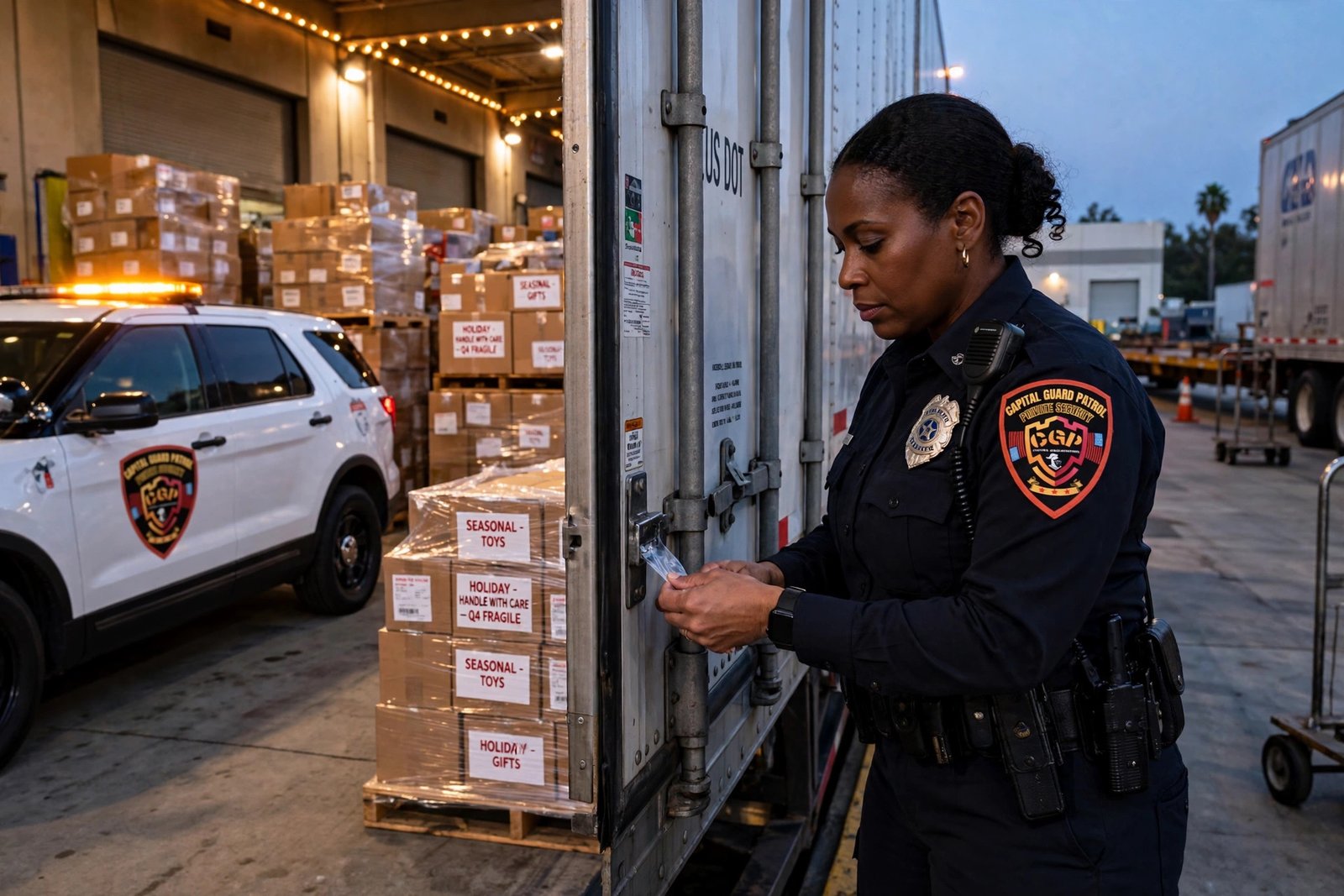
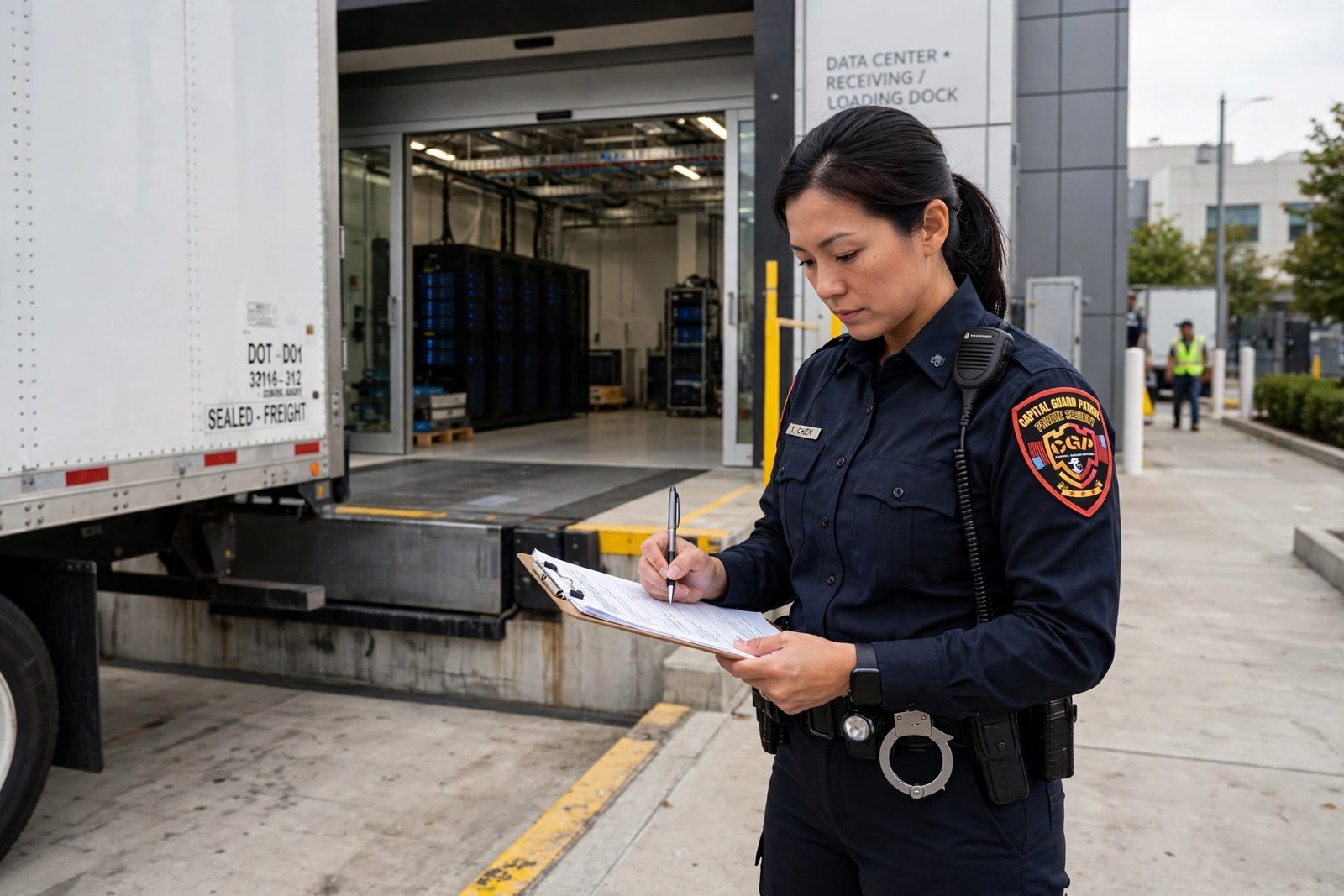
Gate control and entry inspection — Every truck and employee entering a terminal passes through them. They control and inspect entries, verify credentials and paperwork, and decide what — and who — gets onto the dock.
Guarding and tracking critical cargo — Watchmen guard freight crossing the docks and track high-value and sensitive loads as they move between ship, yard, and truck. When a container’s chain of custody breaks, it usually breaks at a handoff they were supposed to watch.
Yard and perimeter security — Terminals are vast, open, and full of blind spots. Roving patrols, fence-line checks, and after-hours presence keep opportunistic theft and trespass down in a facility where a single stolen container can be worth six figures.
Incident documentation — Logs, seal numbers, timestamps, and photos from the gate are the evidence insurers, law enforcement, and terminal operators rely on when a load goes missing. A guard’s notebook is often the first thing investigators ask for.
This is the same layered approach we described in our guide to rail yard security — staffed gates, verified paperwork, and documented patrols — applied to the largest freight gateway on the West Coast.
What Terminal Operators Should Do Before November 20
Nobody can predict how the talks will end. What operators can do is make sure a disruption — or even the uncertainty — does not leave their gates unguarded:
1. Audit your gate coverage now. Know exactly which posts, shifts, and terminals depend on watchmen, and what your minimum staffing level is to keep trucks moving safely. If you cannot name the gap, you cannot fill it.
2. Line up licensed supplemental security in advance. BSIS-licensed port security guards take time to vet, brief, and deploy — especially guards experienced in terminal access control. The operators who call on November 19 will be competing with every other terminal in the complex. Confirm availability, credentials, and site familiarity now, while the extension is still running.
3. Tighten access lists and seal discipline. During any period of disruption, unauthorized entry attempts and seal tampering rise. Verify that gate lists are current, that seal checks are being logged every shift, and that yard patrols are randomized rather than predictable.
4. Document everything. If cargo goes missing during a disruption, the claim starts with the gate log. Make sure incident reporting is consistent across shifts and that supervisors review it daily.
5. Plan for the day after, too. Even if talks succeed, the underlying lesson stands: a single point of failure at the gate is a risk. Many terminals are already reviewing whether their security coverage should include a supplemental layer that does not depend on one workforce alone.
For more on how organized crews exploit freight handoffs, see our post on strategic cargo theft prevention.
The Cost of a Port Shutdown
A stoppage at Los Angeles–Long Beach would not stay local. With record volumes moving through the complex and holiday freight still in transit, a multi-day disruption would ripple into rail yards across the Inland Empire, distribution centers statewide, and store shelves nationwide. The September volume records tell the story: there is no slack in the system to absorb a shutdown, and no alternate West Coast gateway with the capacity to take the overflow.
Against that backdrop, supplemental port security is not a contingency expense — it is cheap insurance on the busiest freight corridor in America.
Protect your terminal before November 20 arrives. Capital Guard Patrol Inc. provides port security guards, terminal access control, and yard patrol services across California, including Los Angeles, Long Beach, the Inland Empire, and Orange County. Call (800) 640-1235 for a free port and terminal security assessment.
Related reading: rail yard security and our security guard services.