Six pallets of Nvidia hardware worth $11.4 million left Oakland, California, on August 29, bound for Fort Worth, Texas — and never arrived. The truck, registered to a food transport company, made several multi-hour stops heading south before investigators lost its trail in San Bernardino County. The loss was not even reported to Oakland police until September 13, more than two weeks after pickup. No arrests have been announced, and none of the hardware has been recovered. It is the latest sign that AI hardware has become the most valuable cargo on American highways — and the reason data center security guards are now part of the conversation at every California facility, warehouse, and loading dock in the AI supply chain.
The Numbers Behind the AI Hardware Theft Wave
This is not one bad shipment. NBC News reported on October 26 that more than $100 million in data center equipment has been stolen from U.S. highways since June 2026 alone — servers, chips, cabling, and copper bound for AI data centers. Overhaul, a supply-chain security firm, put the 12-month figure even higher: more than $150 million in AI equipment stolen between June 2025 and June 2026, with fraud or deception involved in about 92% of the incidents it studied.
The broader cargo picture is just as stark. Verisk CargoNet’s third-quarter 2026 analysis found an estimated $718.9 million in supply-chain crime losses in the first nine months of 2026 — up 39% from the same period in 2025 — even as the number of reported incidents fell. The average value of a stolen load jumped roughly 72%, to about $448,456. Criminals are stealing fewer loads and far more valuable ones, and AI hardware is at the top of the list.
California sits at the center of it. The Oakland shipment is only the newest case: burglaries in Fremont and Union City involved more than $7.5 million in Nvidia cargo last year, two semi-trailers bearing Nvidia branding were taken from a Newark warehouse in September, and in two separate California cases this year, thieves rammed the security vehicles escorting AI equipment shipments — one carrying about $13 million in server gear, another about $10 million in server rack components — then drove off with the trailers. GPS tracking was spoofed in at least one case. Neither load has been recovered.
Why Data Centers Are a Different Security Problem
A data center is not a warehouse with nicer locks. The risks stack up in ways most facilities never face:
The cargo is worth more than the building’s contents. A single pallet of current-generation AI hardware runs close to $1.9 million. A full trailer can exceed $10 million. That value makes every delivery, pickup, and staging area a target — not just the finished facility.
The threat is deception, not force. Fictitious pickups, hacked freight accounts, AI-generated fake driver licenses, spoofed GPS trackers, and trucks disguised with fake decals and operating authorities: CargoNet documented 138 fictitious pickups in the third quarter alone. A guard who only watches the gate is not enough — the checkpoint has to verify the carrier, the paperwork, and the person, every time.
Construction sites are soft targets. New data centers go up fast, in corridors where hyperscale facilities are being built, and the equipment arrives before the permanent security systems are finished. Temporary fencing and cameras cannot challenge a driver with convincing paperwork.
Downtime costs more than the theft. A missing server shipment delays a build-out, voids delivery schedules, and leaves a half-secured site holding the next load. The loss is the hardware, the schedule, and the exposure all at once.
What Data Center Security Guards Actually Do
Professional data center security guards close the gap between the fence and the freight:
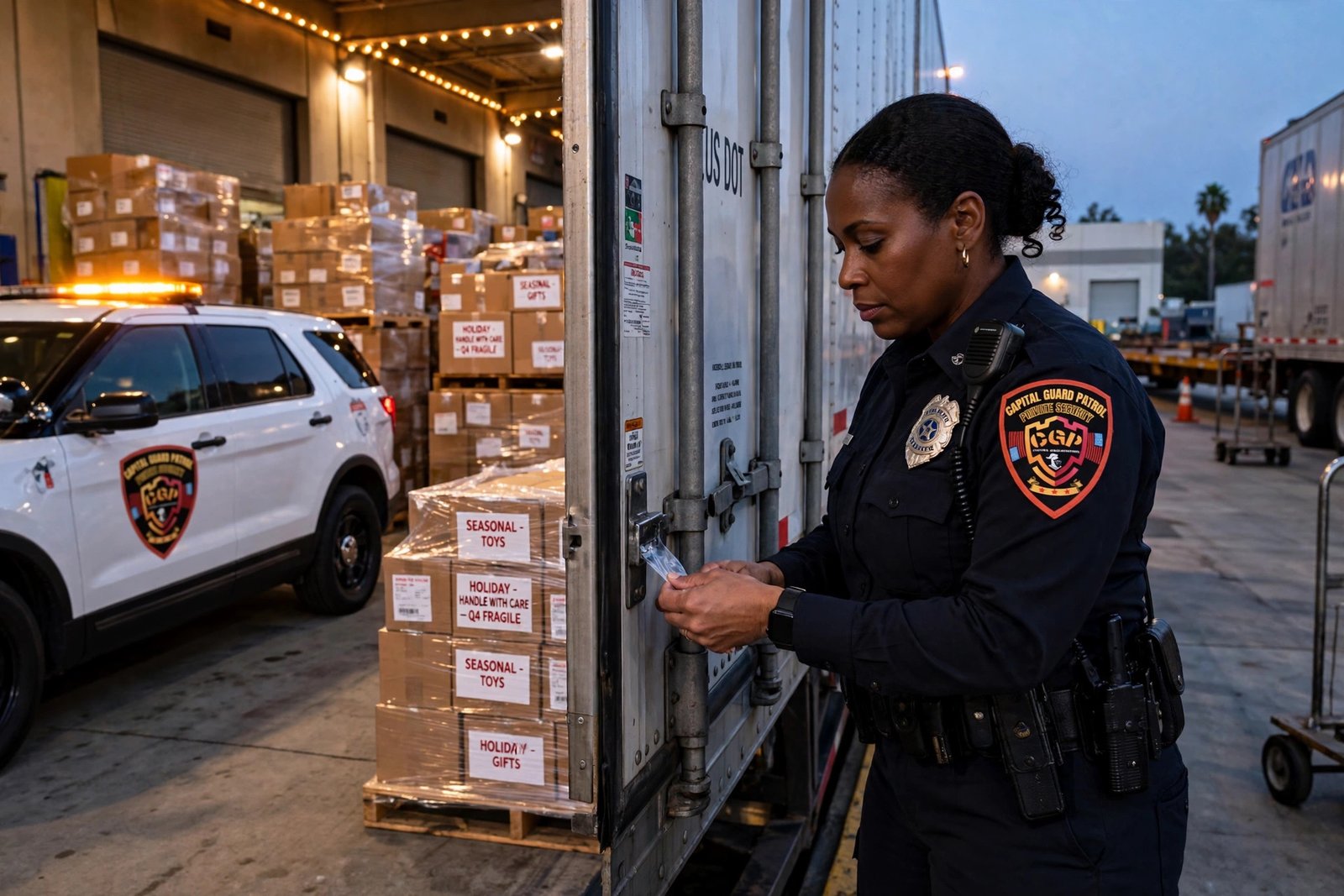
Gate and dock verification — Officers check carrier credentials, bills of lading, and driver identification against the scheduled delivery — and hold any load that does not match, including the polite, well-documented pickup that turns out to be fictitious.
Escort and staging-area coverage — Guards monitor high-value deliveries from gate to dock to rack, keep staging areas under watch, and maintain a chain of custody so a pallet is never unobserved between truck and floor.
After-hours and construction-phase patrol — Data centers under construction and the yards around them get overnight patrol, access control, and incident documentation while permanent systems are still being installed.
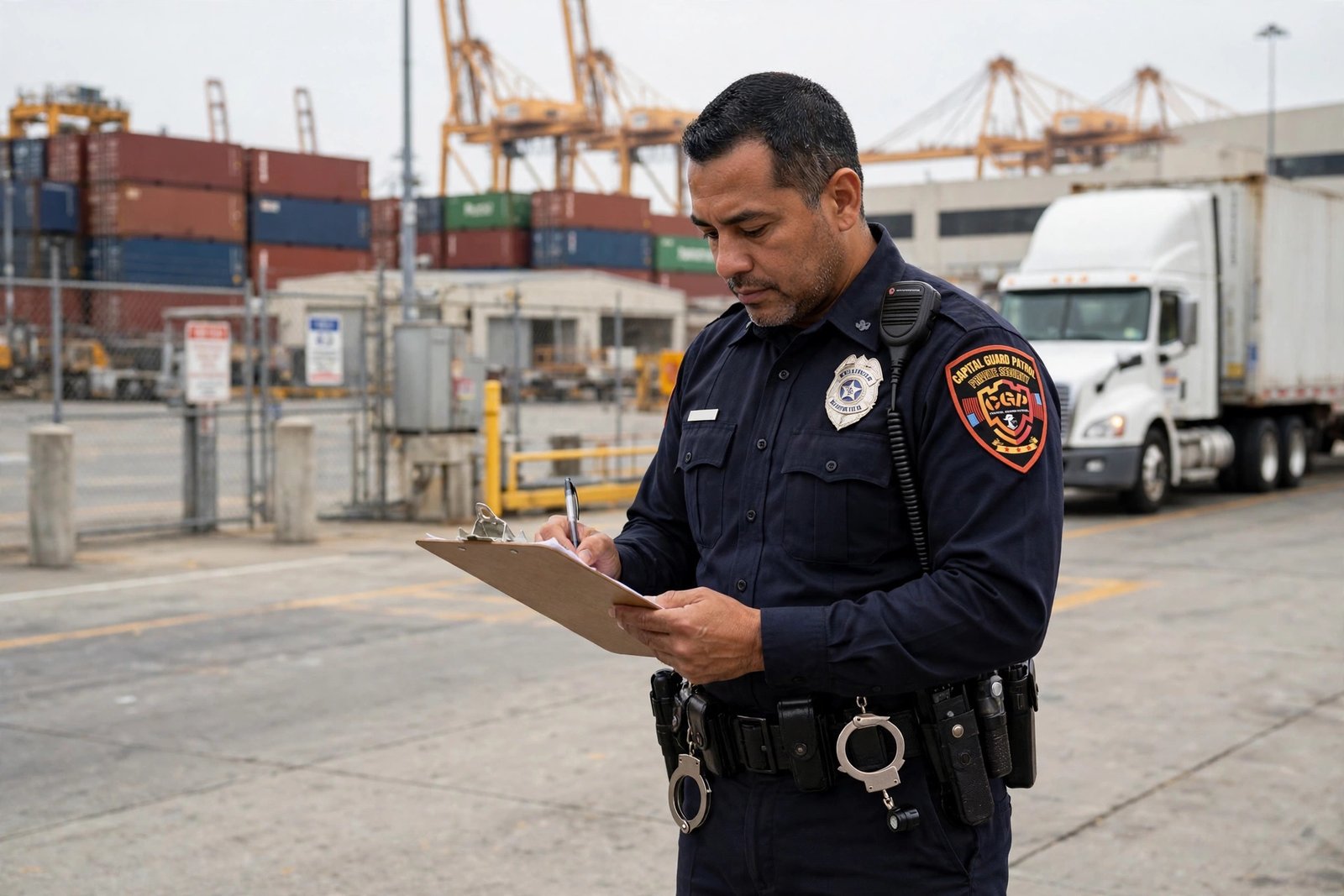
Incident reports that hold up — Timestamped, detailed officer reports give law enforcement and insurers something real to work with — the same kind of documentation that helped recover stolen rail cargo in Los Angeles this fall.
Coordination with law enforcement — When a shipment goes missing or a suspicious pickup is stopped at the gate, trained guards know how to preserve the scene, secure the paperwork, and hand investigators a clean handoff instead of a confused one.
Cameras Watch. Guards Verify.
Technology has a role — GPS tracking, cameras, and access control systems are part of any serious data center security program. But the AI hardware theft wave is a story of technology being beaten: trackers spoofed, freight accounts hacked, fake licenses generated. A camera records a fictitious pickup after the fact. A trained guard at the dock can stop it in the moment by asking the one question the paperwork cannot answer.
The facilities and logistics operators adapting fastest pair both: cameras and tracking watching every angle, and licensed, trained guards owning the gate, the dock, and the staging area — the three places where a $10 million load is won or lost.
The Window to Staff Up Is Now
AI infrastructure spending is not slowing down, and neither is the theft targeting it. Every new data center build in California means more high-value deliveries moving through the same corridors thieves already work — Oakland, the Bay Area, San Bernardino County, and the routes south. Facilities that wait until a shipment disappears are already behind: the Oakland case shows a two-week gap between the theft and the report, and in that time the hardware was gone for good.
If your facility handles AI hardware, server equipment, or data center construction materials, the question is not whether the risk is real — the numbers settled that. The question is whether anyone is standing at your gate who can tell a legitimate carrier from a convincing fake.
Protect your facility and your freight before the next load leaves the dock. Capital Guard Patrol Inc. provides data center security guards, cargo theft prevention, and warehouse and logistics security across California, including Los Angeles, Orange County, the Inland Empire, and San Diego. Call (800) 640-1235 for a free data center security assessment.
Related reading: strategic cargo theft prevention and rail yard security.