The hottest product in physical security right now is the “AI security guard” — software that watches your cameras, flags threats, and even talks down intruders through a loudspeaker. This month alone, one AI surveillance company expanded into truck lots and took over the camera system at a shopping center in Riverside County, California, while retail tech firms pitch AI security guards as the cheaper replacement for on-site officers. But the industry’s own 2026 data tells a different story: after two years of retailers replacing guards with camera arrays, 61% of loss-prevention leaders are now increasing on-site licensed security staffing — the biggest staffing reversal in the data.
What AI Security Guards Actually Do Well
Give AI surveillance its due. It does not blink, take breaks, or get monitor fatigue. A good system can:
- Watch every camera at once — Modern AI platforms scan hundreds of feeds simultaneously, flagging anomalies like unattended bags, crowd surges, or after-hours movement in seconds.
- Kill false alarms — AI-verified alerts filter out the motion-triggered noise that used to flood monitoring centers, so the alarms that fire actually mean something.
- Talk down and deter at a distance — Automated strobes, voice warnings, and remote operators can warn off a trespasser at 2 AM without anyone rolling a truck.
- Build the case file — Time-stamped clips, incident summaries, and searchable video give investigators and insurers exactly what they need.
For wide-open sites like truck lots and distribution yards — where Verisk CargoNet estimated roughly $725 million in cargo theft losses last year — AI coverage from day one is a genuine upgrade over nothing at all.
What AI Security Guards Can’t Do
Here is where the hype breaks down. Cameras, no matter how smart, do one thing: they watch. As one 2026 retail loss-prevention analysis put it, “Cameras document a 12-person coordinated sweep. They do not intercept one.”
- They don’t deter by presence. A camera on a pole doesn’t make a would-be thief walk past the store. A uniformed officer at the door does.
- They can’t intercept. When an organized retail crime crew hits a store, AI can record the whole thing in 4K. It cannot step in, separate people, or make a citizen’s arrest.
- They can’t de-escalate. A shouting match in a lobby, a trespasser in crisis, a parking lot confrontation — these need a trained human reading the room, not a speaker playing a recorded warning.
- They go dark when criminals get technical. Remember the cargo theft data: 71% of security leaders worry about GPS jamming and spoofing. A crew that jams trackers can jam cameras too. Technology that depends on connectivity fails exactly when determined criminals show up.
- They can’t verify identity at the gate. Seventy-eight percent of loss-prevention leaders name fraudulent pickups and carrier impersonation as their top cargo crime concern. A camera sees a truck pull up. A guard checks the paperwork, the seal numbers, and the driver — and stops the load when something doesn’t match.
The Trend Is Local: AI Surveillance Just Moved Into Riverside County
This isn’t an abstract national debate — it’s happening in Capital Guard Patrol’s backyard. This month, AI surveillance firm Cloudastructure announced it completed a competitive takeover of the camera system at a shopping center in Riverside County, California, converting the property to its AI-powered surveillance and remote guarding model. The same company is expanding AI coverage across new truck parking lots, noting that unattended lots are a prime cargo theft target overnight.
Property owners are buying AI coverage fast. The question for each site is whether that coverage comes with anyone who can actually respond when the alert fires.
Why 61% of Retailers Are Rehiring Human Guards
The 2025 Sensormatic Global Shrink Index — surveying 1,200 retail loss-prevention leaders — reveals the industry’s real 2026 budget priorities: AI video analytics leads at 67% increasing spend, but right behind it, 61% are increasing on-floor licensed security staffing. That’s a trend reversal from the 2022–2023 tech-only period, when retailers swapped guards for camera arrays and AI alerts.
The lesson from the 2025 loss data: AI tools create visibility but not deterrence. Retailers learned that watching theft happen in high definition is not the same as stopping it. The strongest 2026 setups pair AI detection with people who can act on it.
The 2026 Formula: AI Eyes, Human Response
The smart money isn’t on AI versus guards — it’s on AI behind guards. The layered model winning in 2026:
- AI surveillance for detection — Cameras and analytics watch everything, flag real events, and filter the noise.
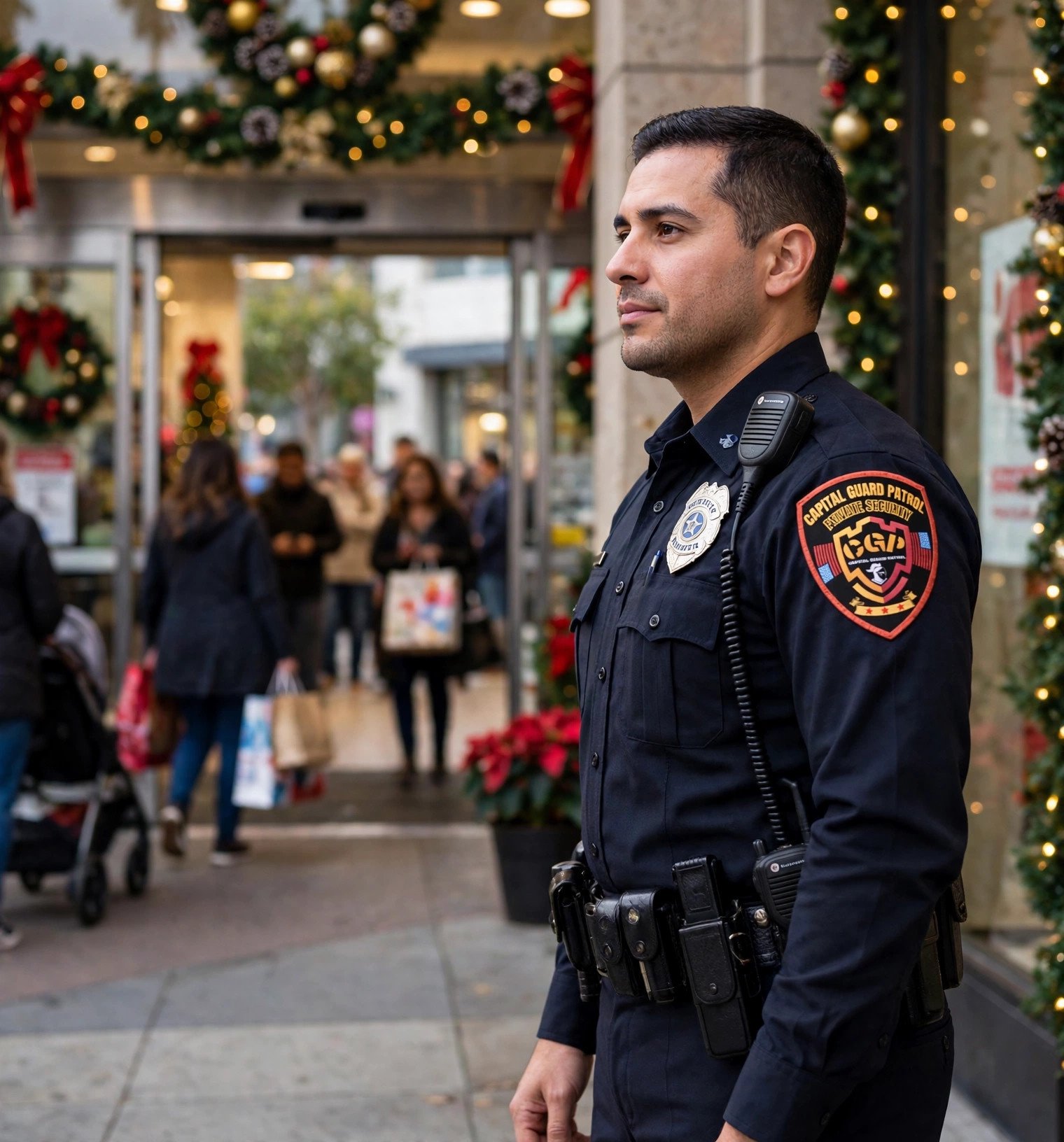
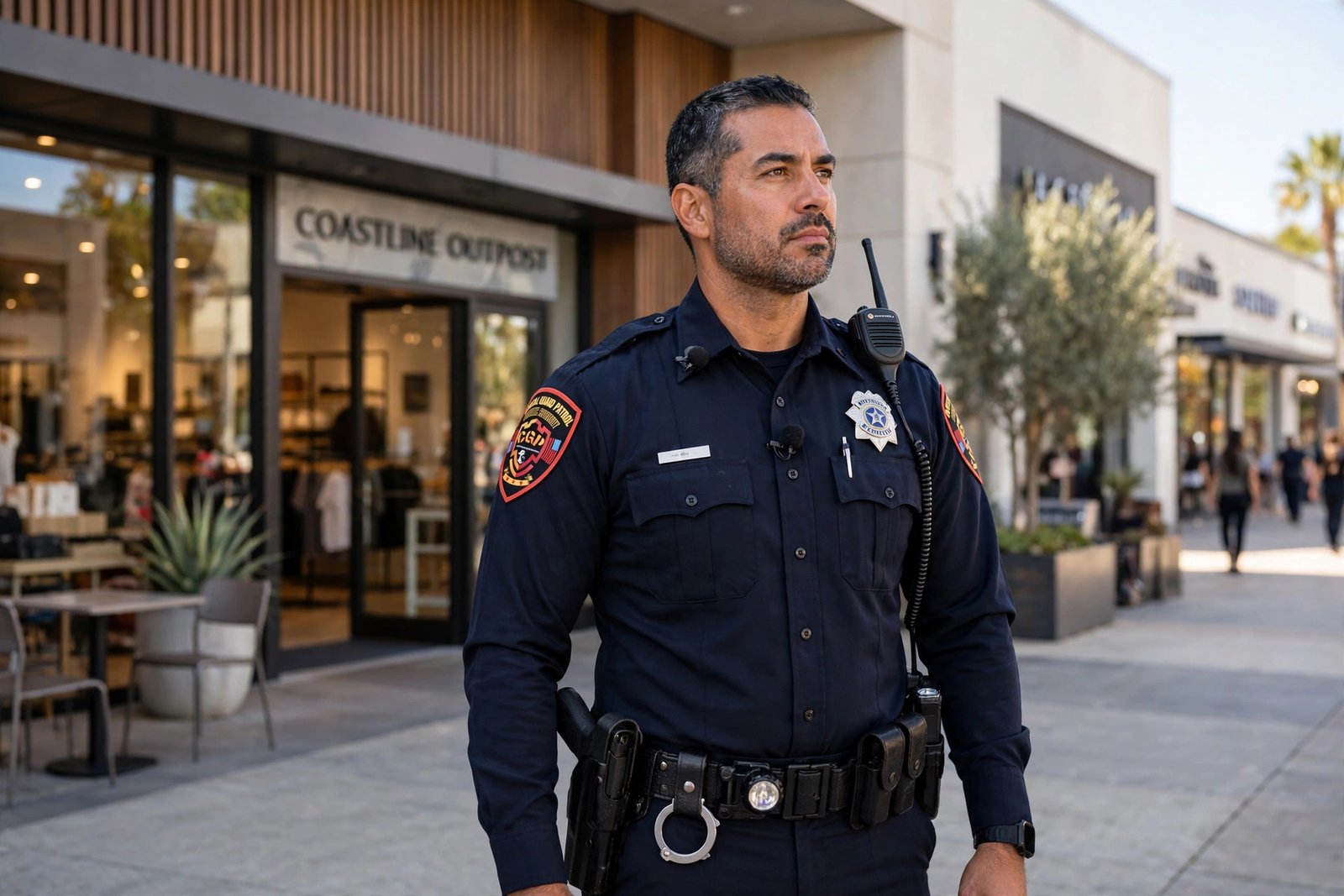
- Licensed guards for response — Uniformed officers deter by presence, verify at gates, de-escalate confrontations, intercept theft in progress, and document incidents for law enforcement.
- Mobile patrol for coverage — Marked patrol vehicles extend that human presence across parking lots, yards, and multi-building properties where a fixed post can’t reach.
One without the other leaves a gap. AI without guards is a very expensive witness. Guards without technology are working blind. Together, they’re the security program 2026’s threat landscape actually demands.
Don’t settle for a camera that can only watch. Capital Guard Patrol Inc. provides licensed on-site security guards, gate verification, and mobile patrol services across California, including Los Angeles, Riverside County, Orange County, and the Inland Empire. Call (800) 640-1235 for a free security assessment — and find out what AI eyes plus human response can do for your property.
Related reading: organized retail crime prevention and cargo theft prevention